Alyson Wharton-Durgaryan
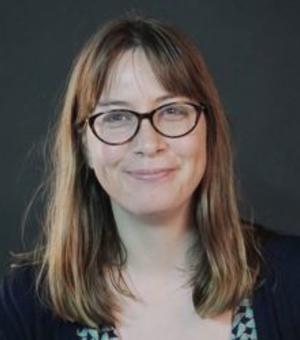
College Affiliation: Wolfson College
Postal Address: The Khalili Research Centre, 3 St John Street, Oxford OX1 2LG, U.K.
Email: alyson.wharton-durgaryan@ames.ox.ac.uk
Current Projects
My fellowship at Oxford involves an investigation of the art collection amassed by two brothers, Gustav and Ulrich Celsing, who both served as ambassador of Sweden to the Ottoman Empire in the long 18th century. I intend to trace the Celsings’ activities in diplomacy and its intersections with commerce and patronage of printing and various forms of ‘art’, through archives in Turkey, Sweden and France, also turning to a reinvestigation of the role of the dragoman Mouradgea D’Ohsson in this triangulation, with recourse to materials in Armenia, Italy and elsewhere. Through investigating these roles and these archives, I hope to be able to reanimate the art collection, which was installed first in the Swedish Palace on the Grande Rue de Péra in Constantinople, then travelling to the Celsings’ apartment situated opposite the palace in Stockholm, and then to their estate, Biby, in the lush, castle-studded countryside of Sörmland, just outside of Stockholm.
Research Interests
My research interests include the ‘late’ period of Ottoman Art and Architecture, spanning the 18th to the early 20th centuries. My PhD and my first book looked at the building milieu of the Tanzimat (reform) period, and the role of the Armenian-Ottoman architect dynasty, the Balyan Family, within this dynamic of reform to the bureaucratic apparatus and changes within the Armenian community. In my second book and many of my publications 2015 to 2025, I turned to investigate the activities of Armenian ‘provincial’ architects in the area now often referred to as ‘the Ottoman East’ (Eastern Anatolia, Upper Mesopotamia, Western Armenia, or Kurdistan). During the last ten years I’ve also been working on Armenian-Ottoman art and antiquities dealers, with a focus on revisiting famous ‘tastemakers’ such as Dikran Kelekian and Calouste Gulbenkian through foregrounding their Ottoman heritage and Armenian experiences.
Biography
I took my BA at York in English and Related Literature with History of Art, and I was increasingly drawn to visual culture, especially that of Byzantine and Ottoman Istanbul/Constantinople. I embarked on an MA at SOAS, where I continued to explore Islamic Art, Architecture and Archaeology and wrote my dissertation on Ottoman architecture of the 18th century. I took a year in Istanbul to learn Turkish and some basic Arabic in Cairo, then I enrolled in a PhD at SOAS under Professor Doris Behrens Abouseif, where I developed a thesis on 19th century Ottoman imperial works. I was funded in the first years by a Khalili Family Trust-endowed job and Central Research Fund fieldwork grant. At ANAMED in Istanbul, I refined my dissertation to focus on answering remaining questions about the Balyan Family, whose agency continued to be rejected in contemporary Turkish scholarship. After my thesis, I worked for three years at Mardin Artuklu University in Southeast Turkey, where I taught in the Department of Art History and I carried out fieldwork on Armenian architects in the region. In 2015, I moved back to the UK, working as Lecturer and then Senior Lecturer at the School of Humanities and Heritage at the University of Lincoln until late 2025.
My research and publications have been funded by the Barakat Trust, the Gulbenkian Foundation Armenian Communities Department, the University of Lincoln Research Resources Allocation Fund, BIAA and NAASR, amongst others. I have held fellowships at the Gulbenkian Museum in Lisbon and ANAMED in Istanbul. Projects include collaborations with MSU/Templeton Religion Trust, CAIA in Ealing/the National Archives in Kew, and the Gulbenkian Museum.
Publications (forthcoming):
- ‘Ottoman-Armenians and Ideas of Iran: Dikran Kelekian, Kirkor Minassian and Hagop Kevorkian’s ‘Persian’ portable Arts in Europe and America at the Turn of the twentieth Century’. In: The Idea of Iran: Iran on the Cusp of Modernity, (ed.) Charles Melville. IB Tauris/ Bloomsbury Academic, 2026.
Selected Publications:
- ‘The Interior World of Armenian Catholics in 1890s Mardin: The Materiality of Sourp Hovsep Church (1894)’. In: Latin and Eastern Catholicism in Ottoman Anatolia: Social, Economic, And Religious Enquiries From 14th-20th Centuries, (ed.) Vanessa R. de Obaldía, Radu Dipratu, Anaïs Massot, Padraic Rohan. Istanbul: ISIS Press, 2025, 115-150.
- ‘Revisiting Art World Moments Through the Kinship and Archive(s) of Dikran Kelekian’, Journal of the Society of Armenian Studies, Fiftieth Anniversary Issue on Armenian Visual Arts, vol 30 (2025): 147-186.
- Forms of Belonging: Armenian Architects, Vernacular Style, and Architectural Placemaking in the Ottoman East (19th-20th Centuries). London and New York: IB Tauris/Bloomsbury Academic, 2025.
- ‘Tbilisi, Baku and Yerevan: Neoclassicism and Imperial Signification in the Caucasus’, Urban History Review / Revue d'histoire urbaine, Special Issue: Imperial and Post-Imperial Capital Cities, 52:1 (2024): 106-144.
- ‘Armenian Elites, Architectural Transference, And Restoration of Order in the Civil Architecture of Post-Massacre Bitlis and Erzurum’, Turcica, 53 (2022): 45-101.
- ‘Open for Business? The Stylistic Choices and Symbolic Vocabulary of Post-Reform Armenian Mansions in Mardin and Bitlis.’ Études arméniennes contemporaines, 14 (2022): 119-160.
- ‘Sopon Bezirdjian, Craft, Heritage and Identity in Victorian Manchester’. In: Craft and Heritage Intersections in Critical Studies and Practice, (ed), Elaine Cheasley Paterson and Susan Surette. Bloomsbury Academic, 2022, 39-62.
- ‘ “I have the honour to inform you that I have just arrived from Constantinople”: Migration, Identity and Commodity Disavowal in the Formation of the Islamic Art Collection at the V&A.’ Museum and Society, 18 (2) (2020): 258-279.
- ‘The Balyan Family and the “Linguistic Culture” of a Parisian Education’, International Journal of Islamic Architecture 5:1 (March 2016): 39-73.
- The Architects of Ottoman Constantinople: The Balyan Family and the History of Ottoman Architecture. London & New York: IB Tauris, 2015.

